
Cable and wire
The drum number, the maker's batch, and who else got one.
House wire in 90-metre coils; power and control cable on drums, cut to length. One stamping foil trader runs the roll and batch pack; no cable trader has started yet.
Where the margin leaks
Two drums of the same size can come from different maker batches. Ordence barcodes each drum and coil with its lot and status, finds it by rack with a phone scan, and holds back anything that failed QC (quality check). On a complaint, the invoice leads to the batch and every other buyer of it.
How the cable trade works
Sold by the metre, stocked by the drum, priced off copper.
A cable is defined by conductor (copper or aluminium), size in sq mm, cores, insulation (PVC or XLPE), armour and voltage grade. Contractors also quote the Indian Standard: IS 694 for PVC house wiring, IS 1554 for heavy-duty PVC power cable, IS 7098 for XLPE. House wire comes in 90-metre coils, often FR or FRLS (flame-retardant, low-smoke) grade. Power and control cable comes on drums, cut to the job's length.
After each cut, the drum holds less than its label says. A count of drums hides the metres left, and the short ends quietly lose money. Makers revise prices when copper moves, so a month-old quote can be below cost by billing day.
Units and documents
- On the drum. Drum number, size and cores, metres, maker's batch and standard.
- With the drum. The maker's test certificate; project buyers ask for it by drum number.
- With the truck. Drums are heavy and costly, so most loads cross the ₹50,000 e-way bill threshold.
GST and HSN for cable and wire
What GST asks of you
Insulated wire and cable is heading 8544, at 18% in Schedule II. Bare copper wire (7408) and stranded copper wire and cable (7413) are 18% too.
Copper scrap from cut ends is its own supply. Scrap bought from an unregistered seller is under reverse charge, and between registered businesses the buyer deducts 2% GST TDS on contracts above ₹2.5 lakh, both since 10 October 2024.
What Ordence does
Each drum and coil barcoded with its lot, found by rack with a phone.
Nothing ships without passing QC; packing notes carry transporter, LR and e-way bill.
HSN on every line. Ordence prepares the GSTR-1 and e-way bill files; you or your CA upload them.
GST rates checked 14 October 2026 against Notification 9/2025-Central Tax (Rate), in force since 22 September 2025. Classification depends on the exact goods. Confirm yours with your CA.
In the system
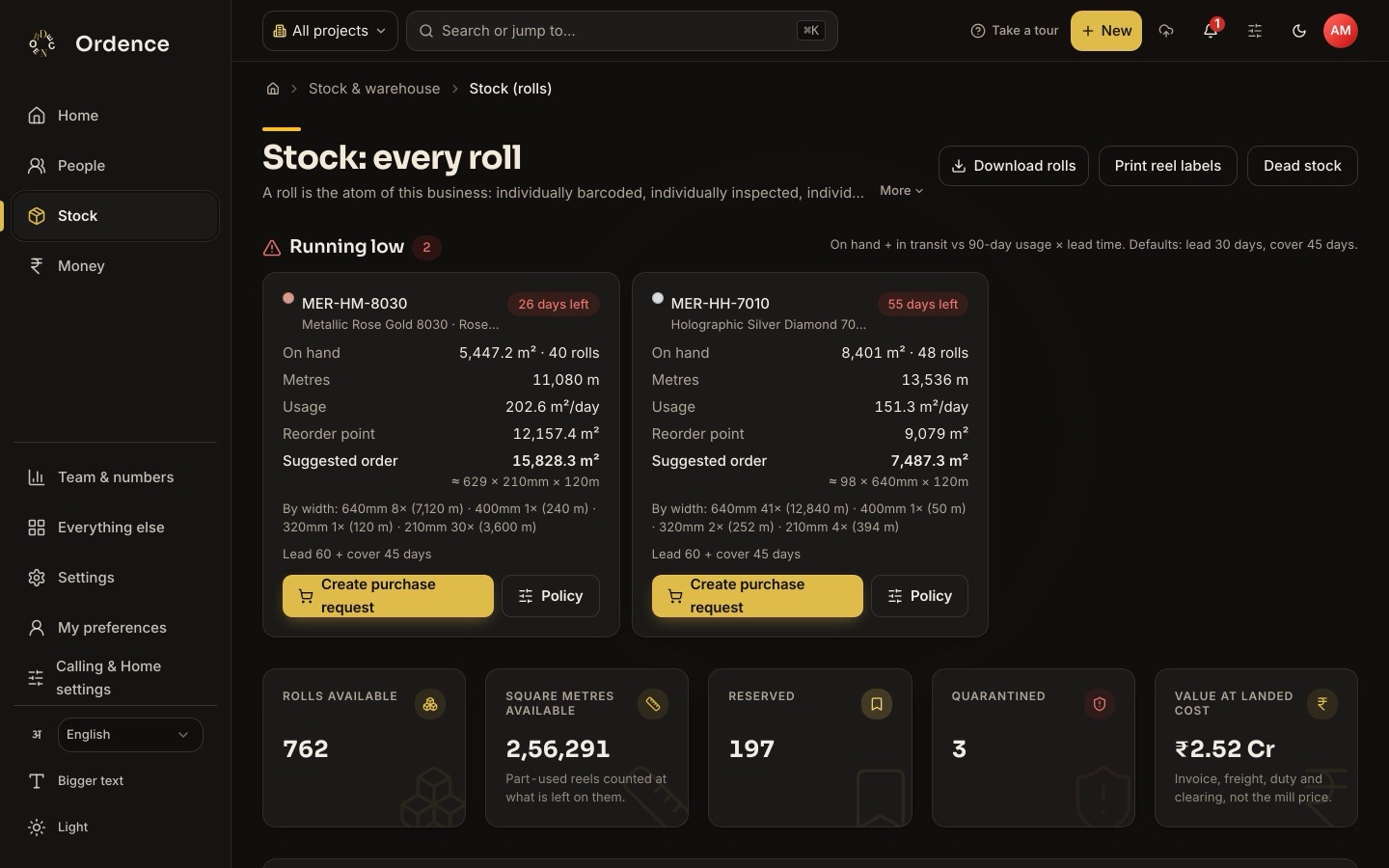
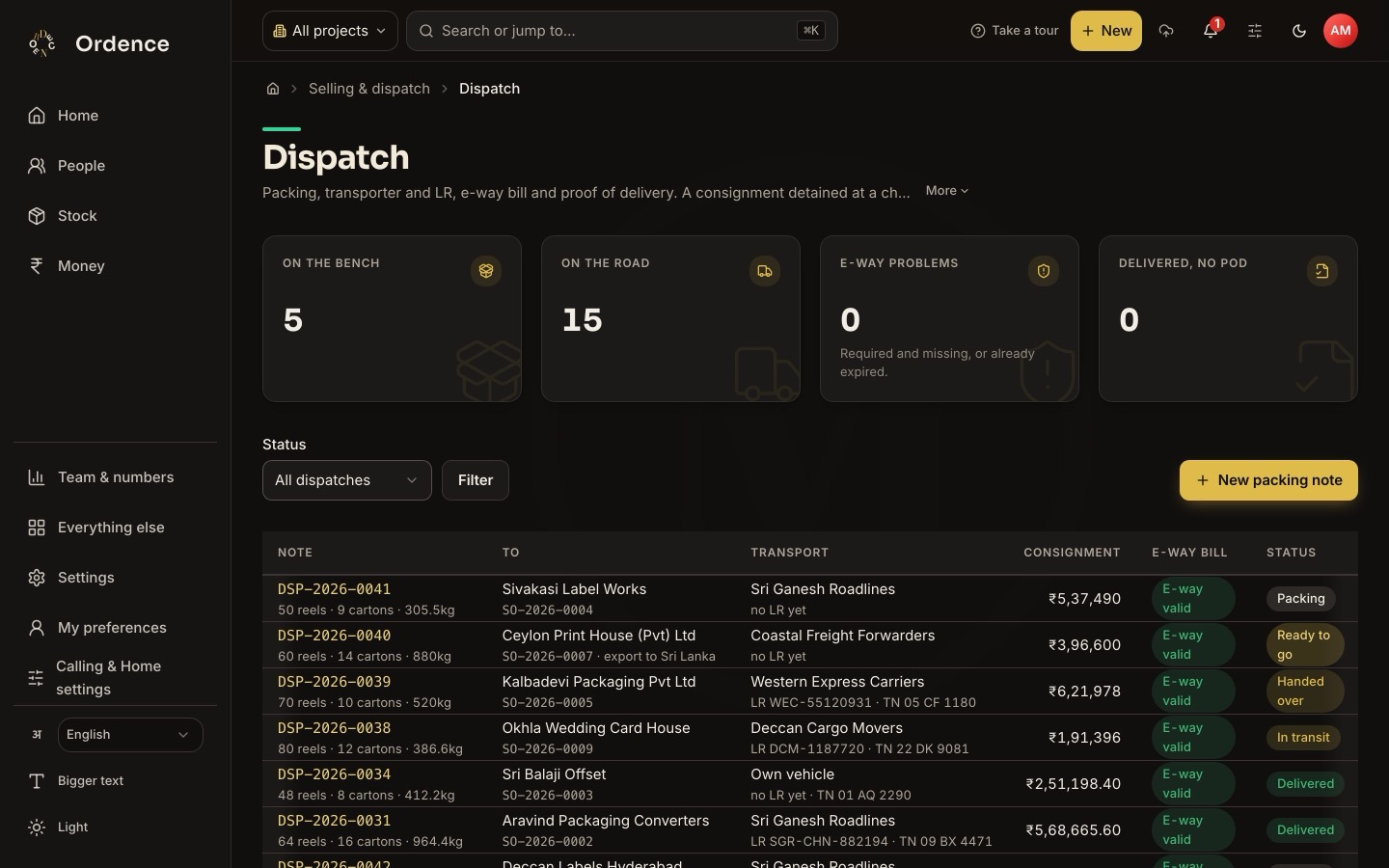
The foil trader's screens, so they say reel where you would say drum or coil.



Questions
Can we find a drum from the godown floor?
Yes. Scan the drum label on a phone: size, rack, batch, and the order it is kept for.
Can a drum that failed QC still be dispatched?
No. A failed check puts the drum on hold, and dispatch will not take it.
A contractor complains about one drum. Which other drums came from that batch?
The invoice shows each drum and its batch, and Ordence lists every other buyer who holds that batch.
Bring your drum list.
Drum numbers, label lengths, and what is left after the last cut. On the fit call we check first how cuts and leftovers are recorded.
Questions first? Email the founders.