
Film and packaging
BOPP and PET, costed per m² at the micron you sell.
Imported reels, where freight, duty and slitting trim decide the real margin. The roll and batch pack runs at one stamping foil trader; no film trader uses it yet.
Where the margin leaks
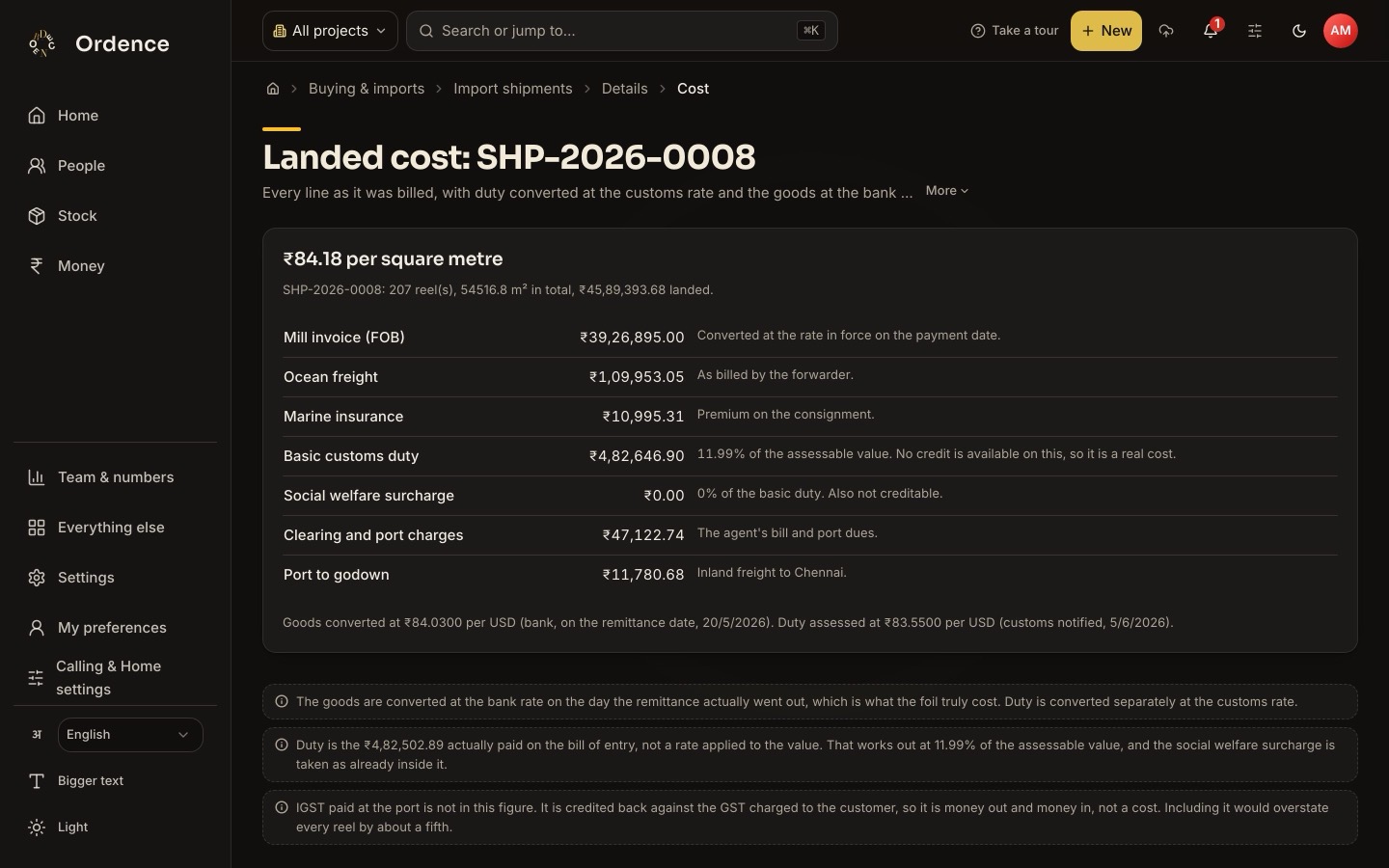
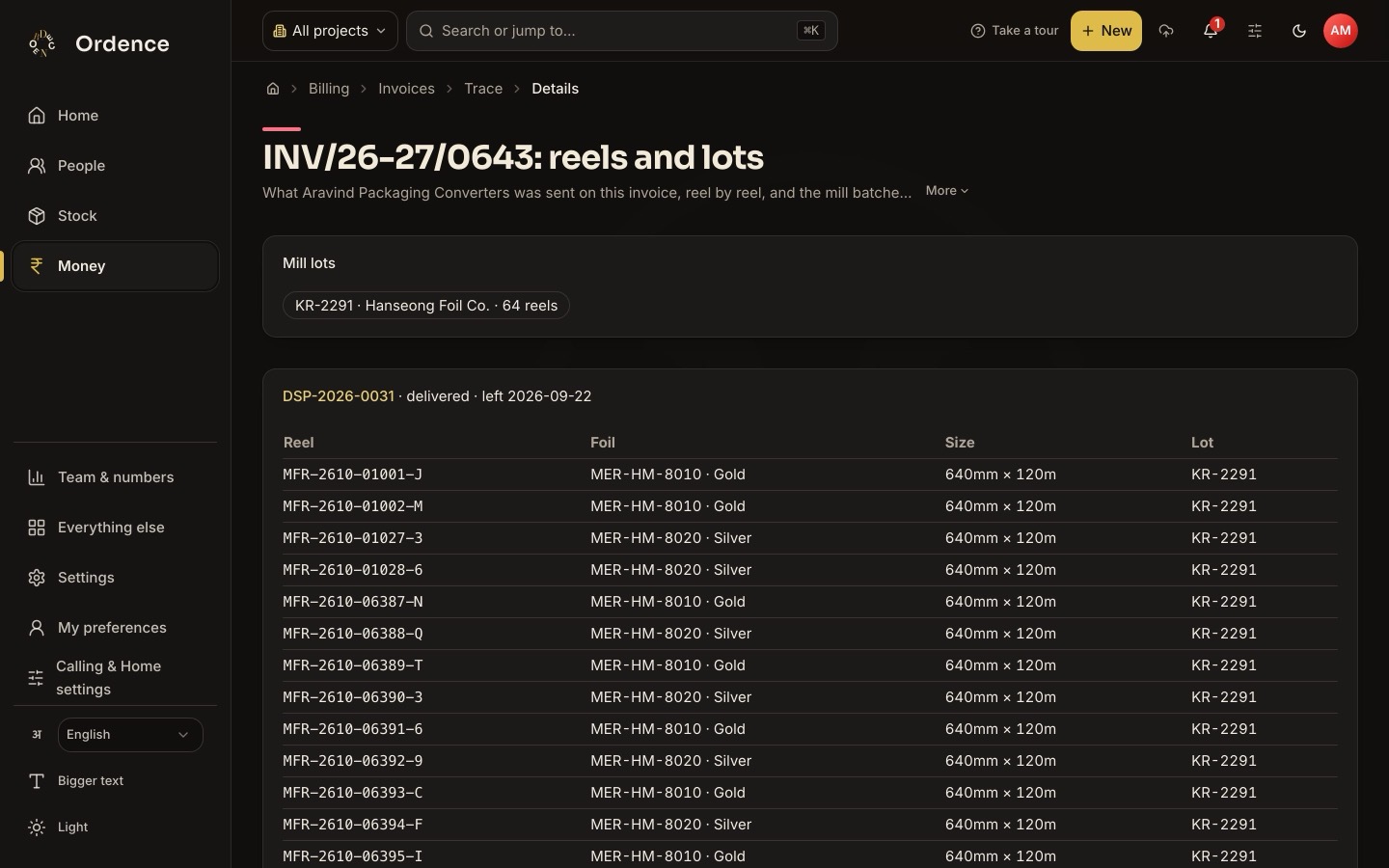
BOPP and PET jumbos arrive by shipment, bought in foreign currency. By the time a reel is slit for a converter, its cost includes freight, duty, clearing and the trim on the floor. Ordence spreads each shipment's costs onto every reel as a cost per m², prices blade loss and trim in rupees, passes lot and cost to the slit reels, and warns when a price drops below target.
How the film trade works
Bought by the kg, sold by the kg, the m² or the slit reel.
Mills price by the kg; converters think in m². So every reel needs weight and area. m² per kg = 1,000 ÷ (microns × density). BOPP (density about 0.91) gives roughly 55 m² per kg at 20 microns; PET (about 1.40) roughly 60 m² per kg at 12 microns. A kg price means little until it is a m² price at the buyer's micron.
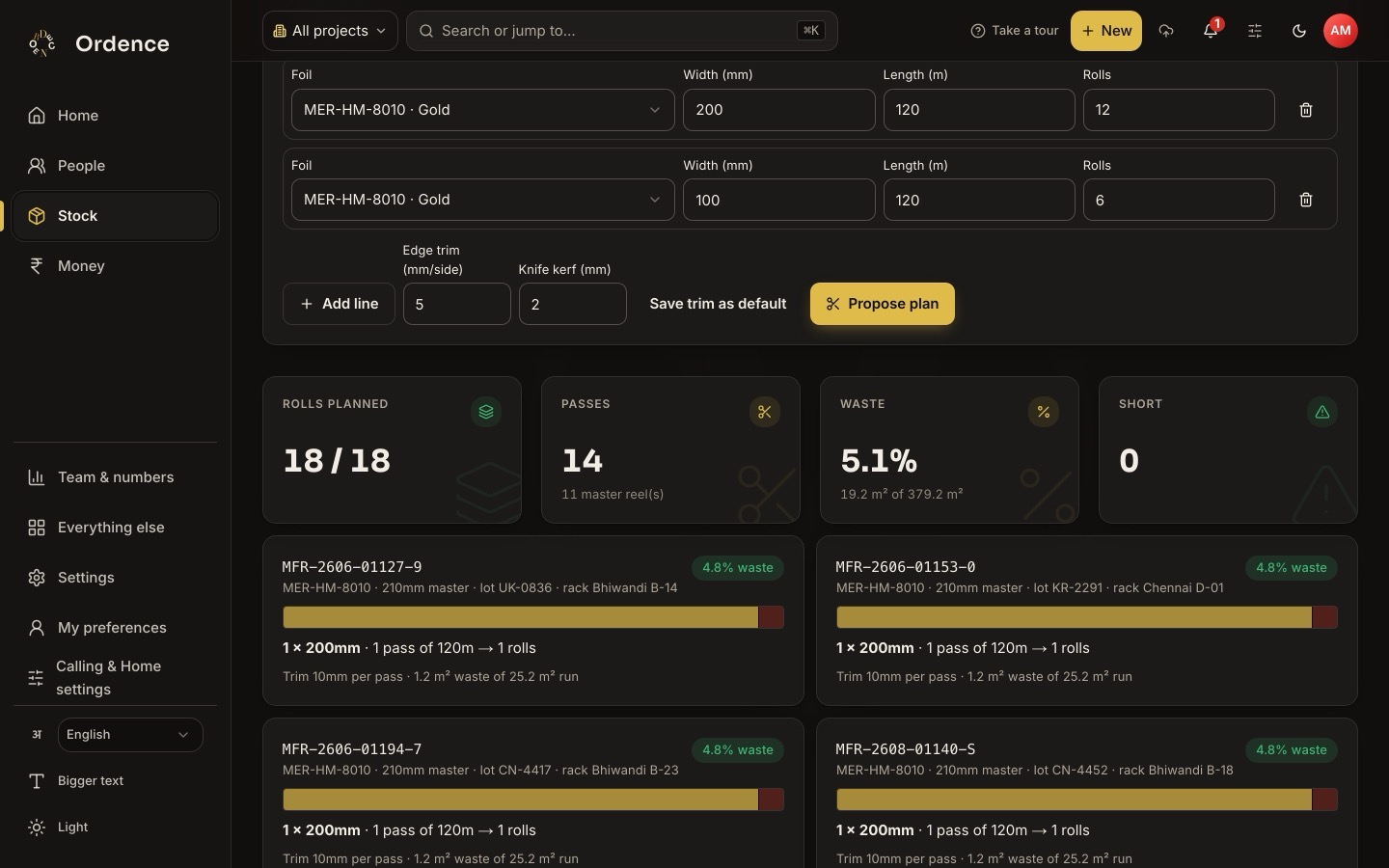
Jumbos are slit to the widths a converter's machine runs, on 3-inch (76 mm) or 6-inch (152 mm) cores. Trim and core-end metres are waste you paid duty on. The Bill of Entry shows basic customs duty, the social welfare surcharge and IGST. Duty and surcharge go into landed cost. IGST stays out: it is input tax credit, shown in GSTR-2B under imports.
Units and documents
- On the reel label. Film type, microns, width (mm), length (m), net kg, core size and mill lot.
- From the mill. A test certificate per lot and a reel-by-reel packing list.
- From customs. The Bill of Entry, with duty and IGST paid.
GST and HSN for film
What GST asks of you
Plain plastic film, including BOPP and PET, is heading 3920: 3920 20 for polypropylene, 3920 62 for PET. Self-adhesive film is 3919. Both are 18%, in Schedule II.
Above ₹5 crore of turnover, the invoice carries six HSN digits; up to ₹5 crore, four on a B2B invoice. See HSN codes.
What Ordence does
Shipment costs spread over every reel by value or area, as cost per m².
HSN on every line; CGST and SGST or IGST from the buyer's state.
GSTR-2B matched to supplier bills before you claim credit. Nothing is filed for you.
GST rates checked 14 October 2026 against Notification 9/2025-Central Tax (Rate), in force since 22 September 2025. Classification depends on the exact goods. Confirm yours with your CA.
In the system
The foil trader's screens. Film uses the same slitting and shipment costing. Check your per-kg buying against per-m² selling on the fit call.



Questions
How is landed cost spread across a film shipment?
By value or by area, giving each reel a cost per m². Slit reels keep it.
Does Ordence track exchange rate exposure?
Yes, with rates typed in by hand. It shows foreign-currency exposure on imports; the books stay in rupees.
Can we see the waste before we slit?
Yes. The planner suggests the least-waste cut and shows the waste in rupees before the job is booked.
Send one Bill of Entry and its packing list.
On the fit call we turn it into a cost per m² for each reel, so you can check it against the margin you quoted.
Questions first? Email the founders.