
Label stock
Face, adhesive and liner, slit to the press width.
Small orders from converters who reorder on a rhythm. The roll and batch pack is live at one stamping foil trader; no label stock trader runs it yet.
Where the margin leaks
Each roll is slit to one converter's press width and core. Orders are small and frequent. Ordence quotes per inch with the margin in view, keeps each converter's presses on file, finds a roll by width and rack with a phone scan, and flags converters who are late for their usual reorder.
How the label stock trade works
Face, glue and backing, slit to a press width.
Label stock is a sandwich. On top, the face: paper (chromo, direct thermal) or film (PP, PE). Then the adhesive: permanent, removable or for chilled goods. Then the release liner (the backing): glassine or PET. The item is all three. Chromo with permanent glue on glassine is not the same product as chromo with freezer glue, and the wrong one shows when labels peel off a cold bottle.
Jumbo rolls are slit to each press's web width, on the core the press takes, commonly 3 inches (76 mm). Converters buy by area: 1,000 metres at 330 mm is 330 m². Orders repeat weekly, and the trader with the right face, glue and liner in that width the same day keeps the account.
Units and documents
- On the roll. Face and GSM or microns, adhesive, liner, width (mm), length (m), core and maker's lot.
- For pricing. m² for jumbos; per-inch rates for slit rolls.
- From the maker. A lot number per jumbo, where any glue complaint is traced.
GST and HSN for labels
What GST asks of you
Self-adhesive paper in rolls falls under 4811, self-adhesive plastic film under 3919, and printed or plain paper labels under 4821. All three are 18%, in Schedule II.
Woven and other textile labels (5807) are 5%, in Schedule I. A trader who also sells woven labels to garment units needs both rates in one item list.
What Ordence does
Per-inch pricing, GST from the buyer's GSTIN, margin saved at quote time.
Each converter's presses on file, next to the lots they approved.
HSN on every line, and a GSTR-1 file for you or your CA to upload.
GST rates checked 14 October 2026 against Notification 9/2025-Central Tax (Rate), in force since 22 September 2025. Classification depends on the exact goods. Confirm yours with your CA.
In the system
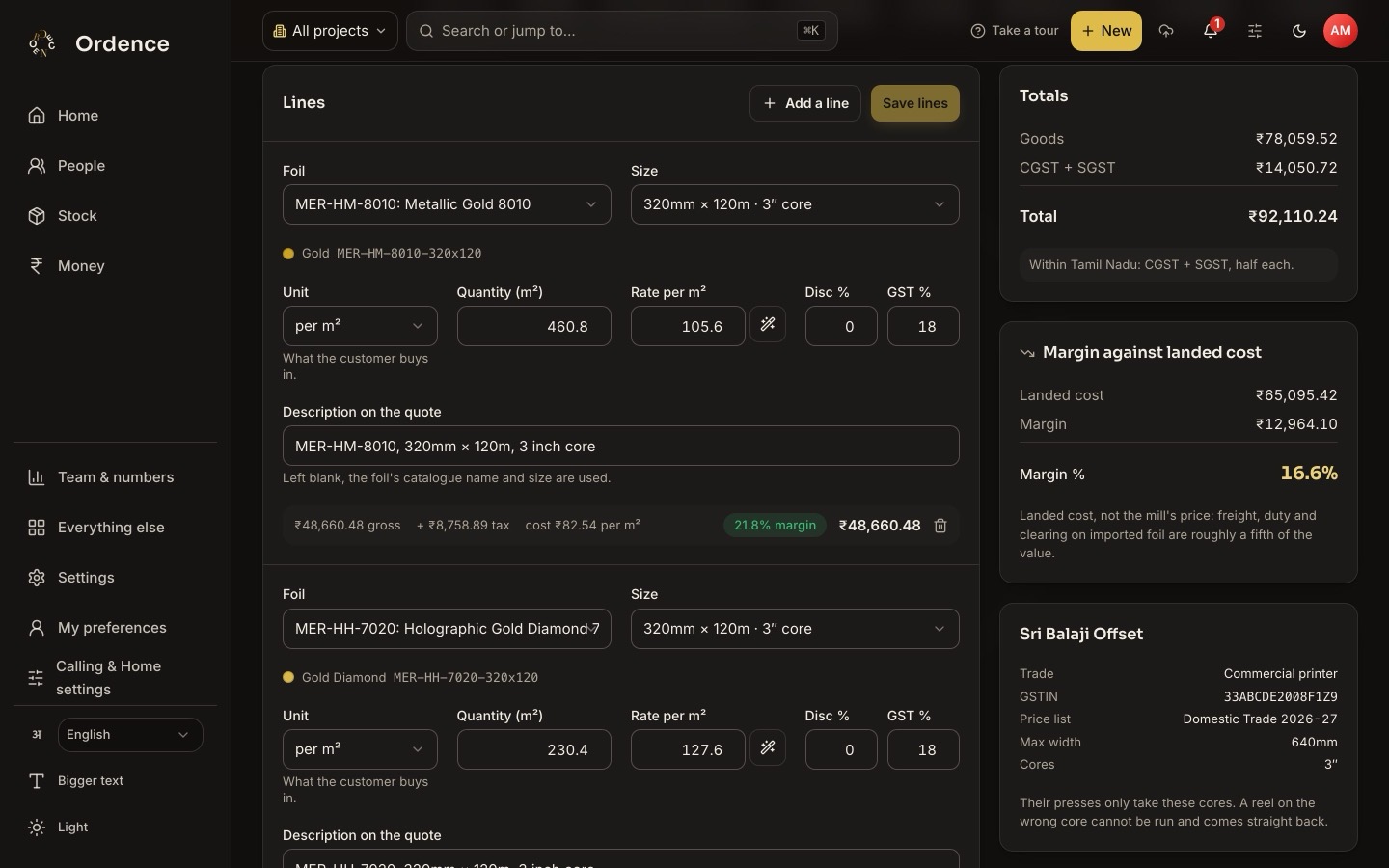
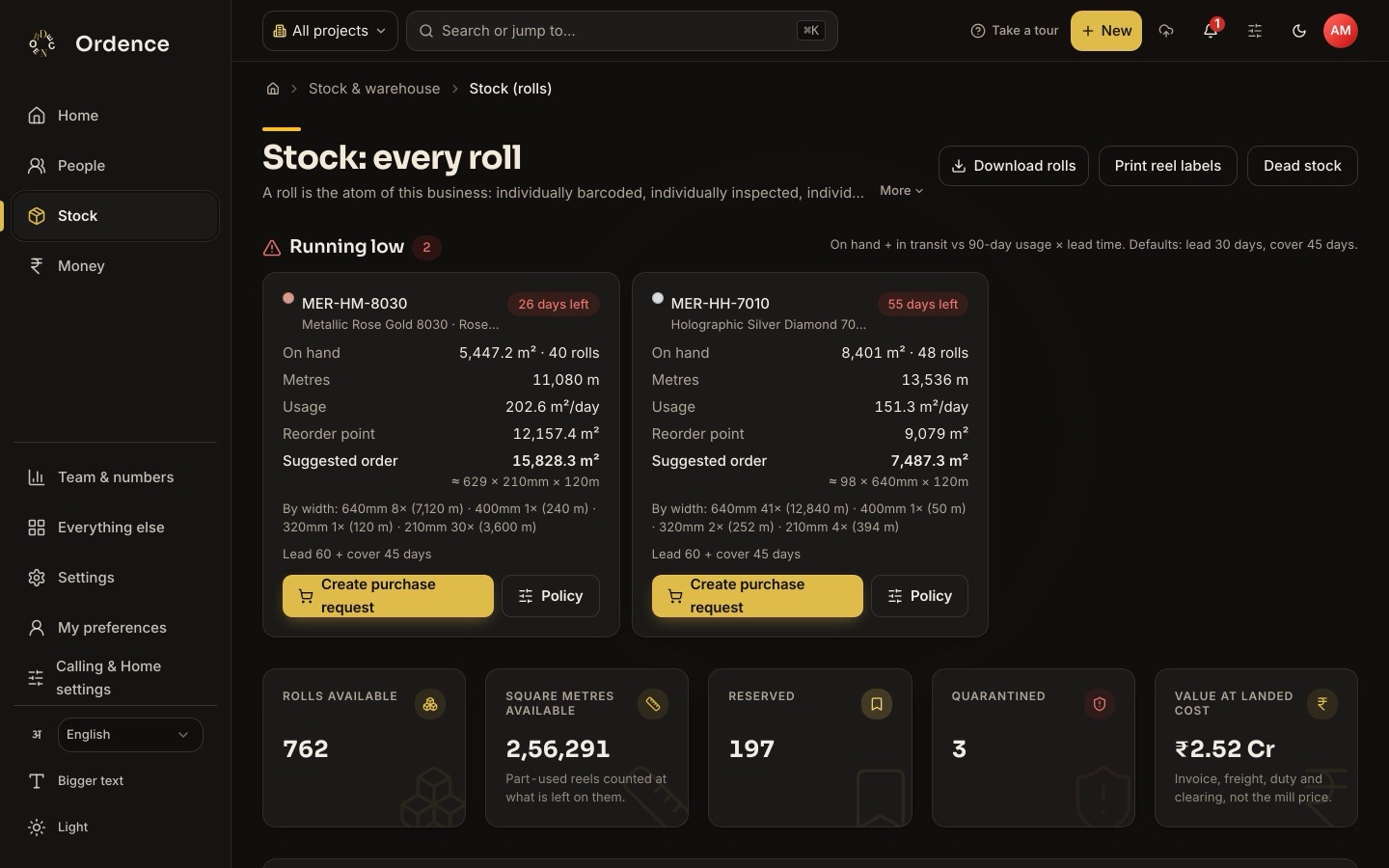
The foil trader's screens: a quote, the stock list, a phone lookup. Check on the fit call that face, glue and liner sit as one item in your list.



Questions
Can we keep each converter's press details on file?
Yes. Each customer profile lists their presses and the lots they approved.
How do we spot a converter who has stopped ordering?
The reorder radar learns each converter's usual gap, predicts the next order, and ranks late ones by money at risk.
Can we find a roll from the godown floor?
Yes. A phone scan shows its width, rack, lot and any order holding it.
Bring your converters' press list.
Web widths, cores, and the face, adhesive and liner each press runs. On the fit call we check that every combination sits as one item, with its own rate.
Questions first? Email the founders.