
Money and GST
GST invoices, books and cash, from the same stock you sold.
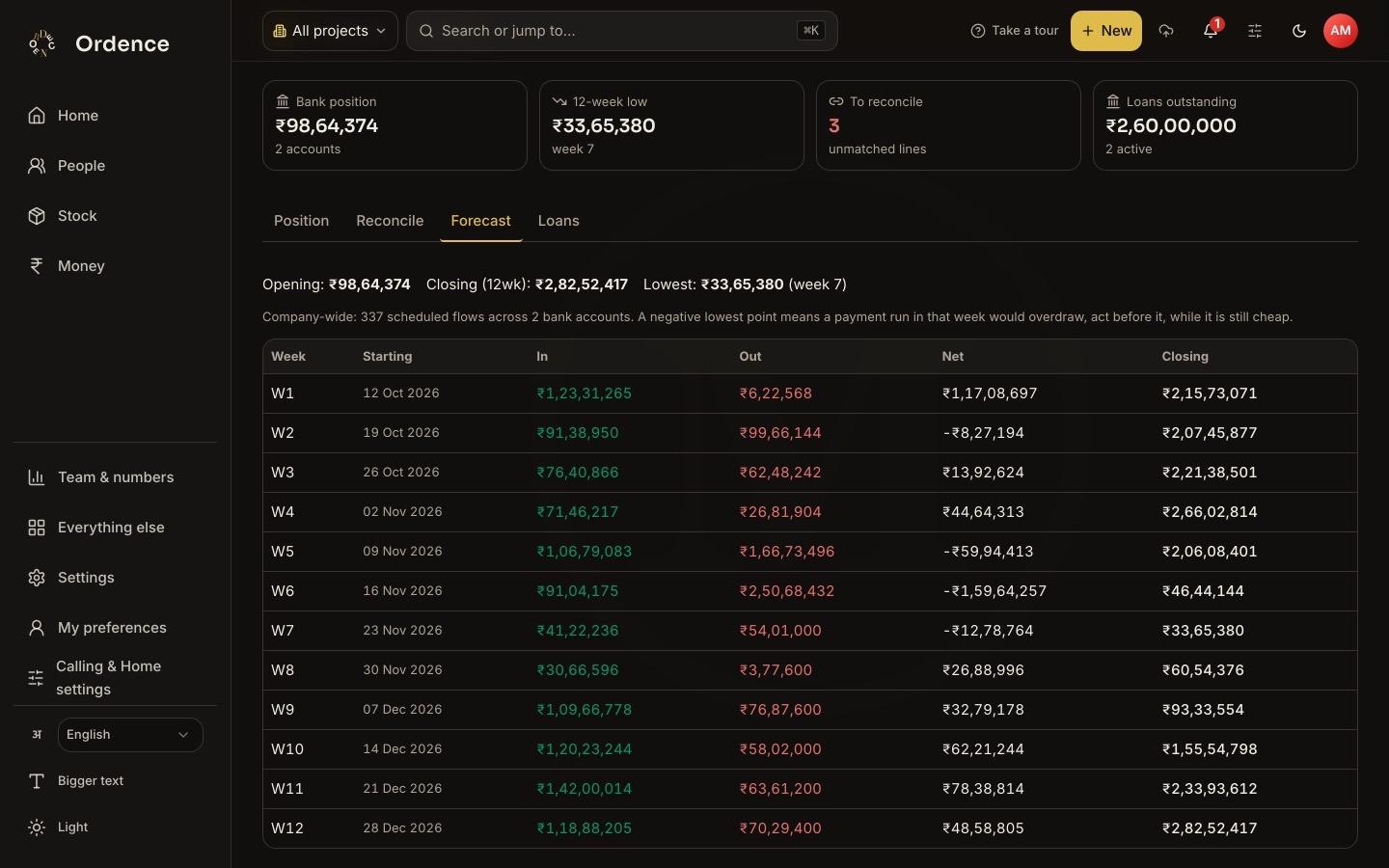
The invoice comes from the order, so the GST return, the books and what the buyer owes all start from one record. Purchase bills are checked before you claim tax credit. A 12-week forecast shows the week cash runs short.
What it does
GST documents, books, bank and Tally.
GST invoices and credit notes
Invoice PDFs with HSN code, amount in words and a UPI QR. CGST and SGST, or IGST, set from the buyer's state.
Bank statement reconciliation
Statements from the five banks above, with receipts matched to invoices. Nothing is booked until a person confirms.
Tally import and export
TallyPrime or Tally.ERP 9 data in as XML or CSV. Tally-ready XML out for your CA.
GST without retyping
How a sale becomes return data.
Invoices come from the order, so HSN, quantity and value are never typed twice. GSTR-1 (your sales return) comes out as a JSON file, and the GSTR-3B figures from the same records.
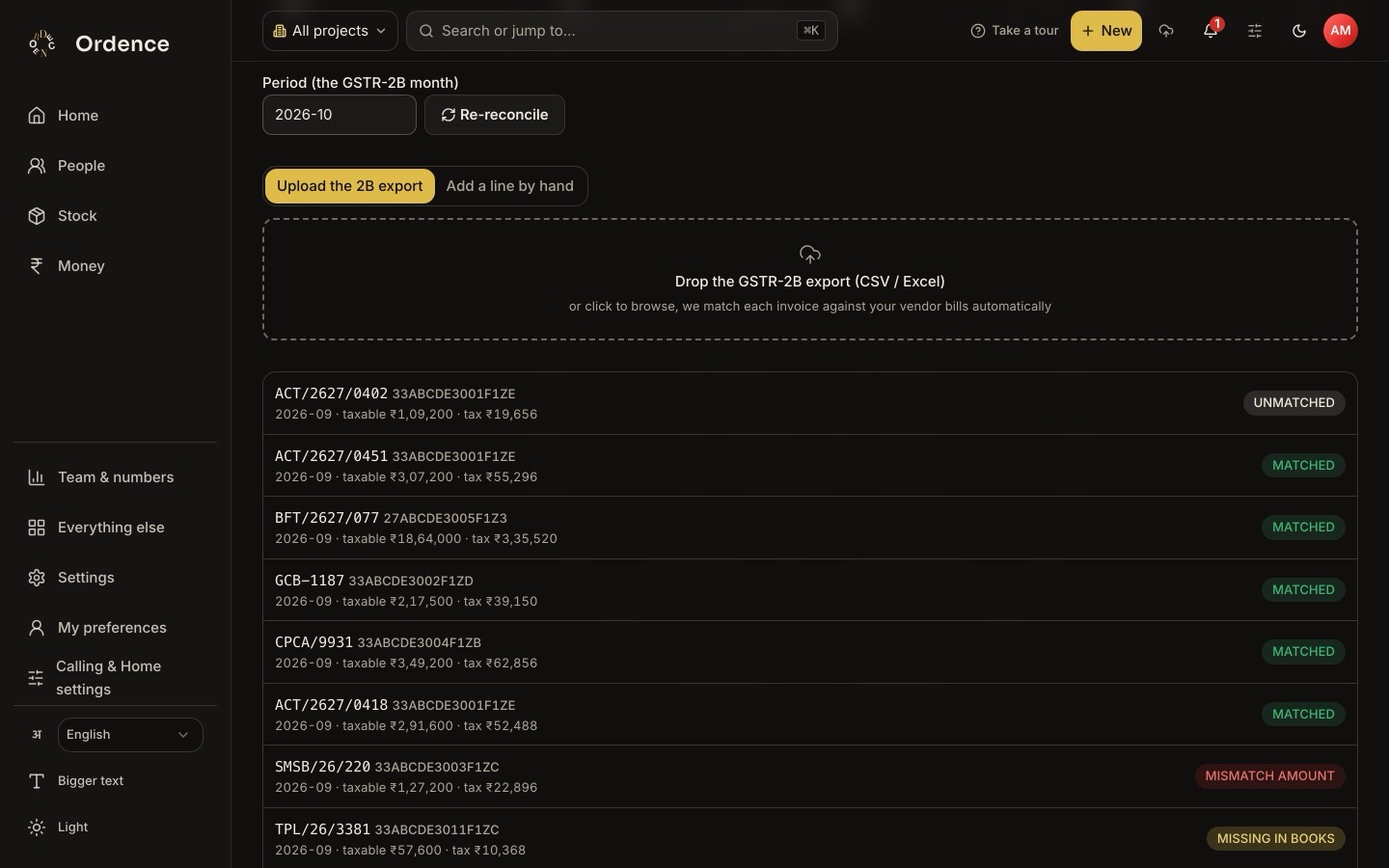
Purchase bills are matched against GSTR-2B (the monthly statement of purchase invoices your suppliers reported to GST) before you claim input tax credit (ITC). See the GSTR-2B reconciliation guide.
Input tax credit is checked line by line on every purchase bill, by HSN/SAC and date. Blocked credits under section 17(5) are flagged and kept out of your claim. Credit missing from GSTR-2B is held back and listed for follow-up with the supplier. Common credit used for both taxable and exempt sales is split under Rule 42, and the reversal is posted for you.
E-way bill details are prepared in the portal's format from the same invoice. The IRN (e-invoice number) is made on the portal and recorded against the invoice. The e-way bill thresholds guide says when you need one.
Ordence prepares the return data; you or your CA upload and file it on the portal.

Books and bank, confirmed by a person
Full double-entry accounts.
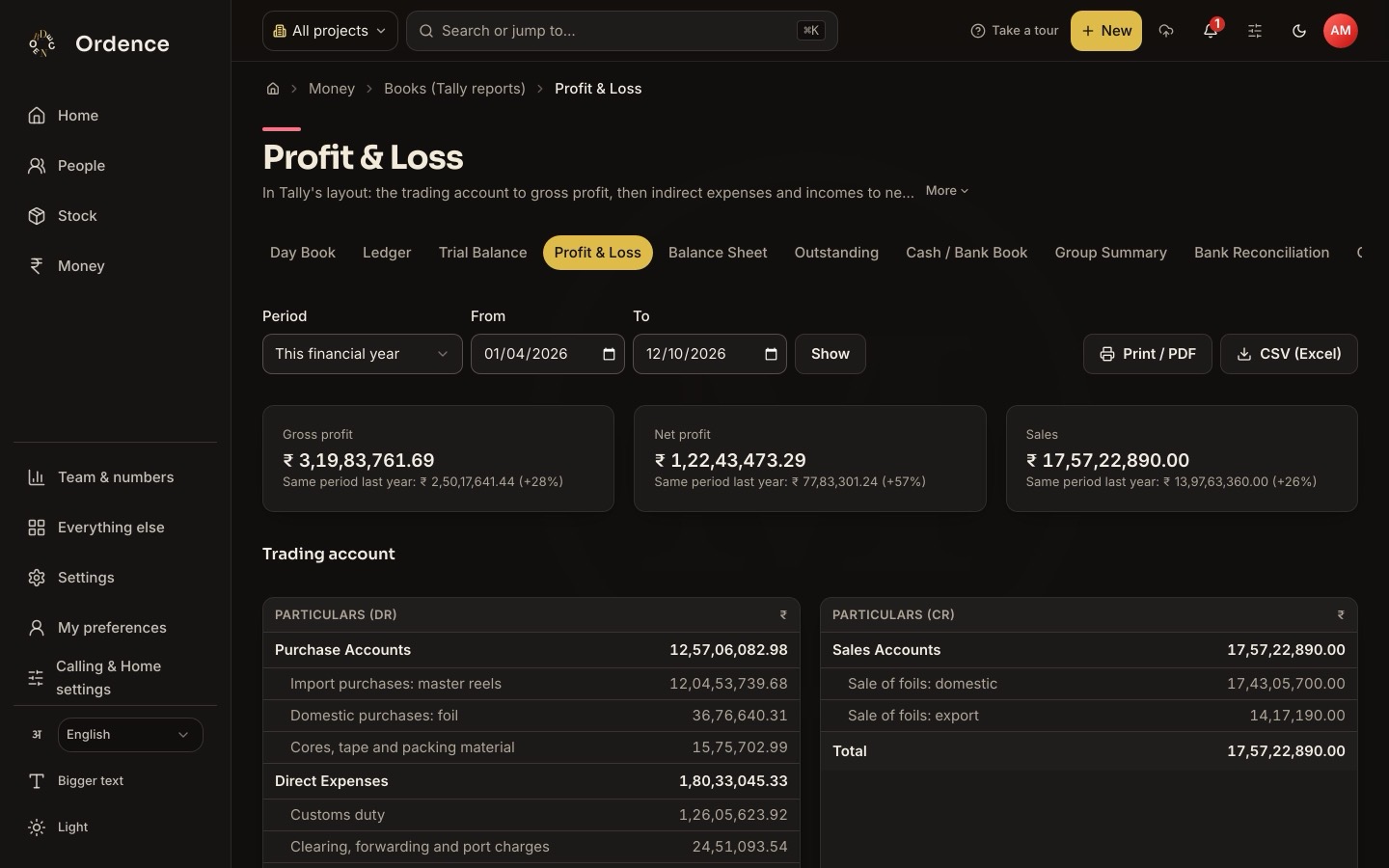
Ledger, day book, trial balance, profit and loss, balance sheet, and bill-wise ageing (how long each bill is unpaid).
The AI can draft an entry; it stays a draft until someone confirms it (how the AI works). A period lock stops back-dated changes, and every edit goes into a log that cannot be edited.

Money controls an owner reads
What is owed, what is due, and when cash runs short.

- Receivables, approvals and budgets. Who owes what, by bill. Payments sent for approval. Budgets split into committed, incurred and paid.
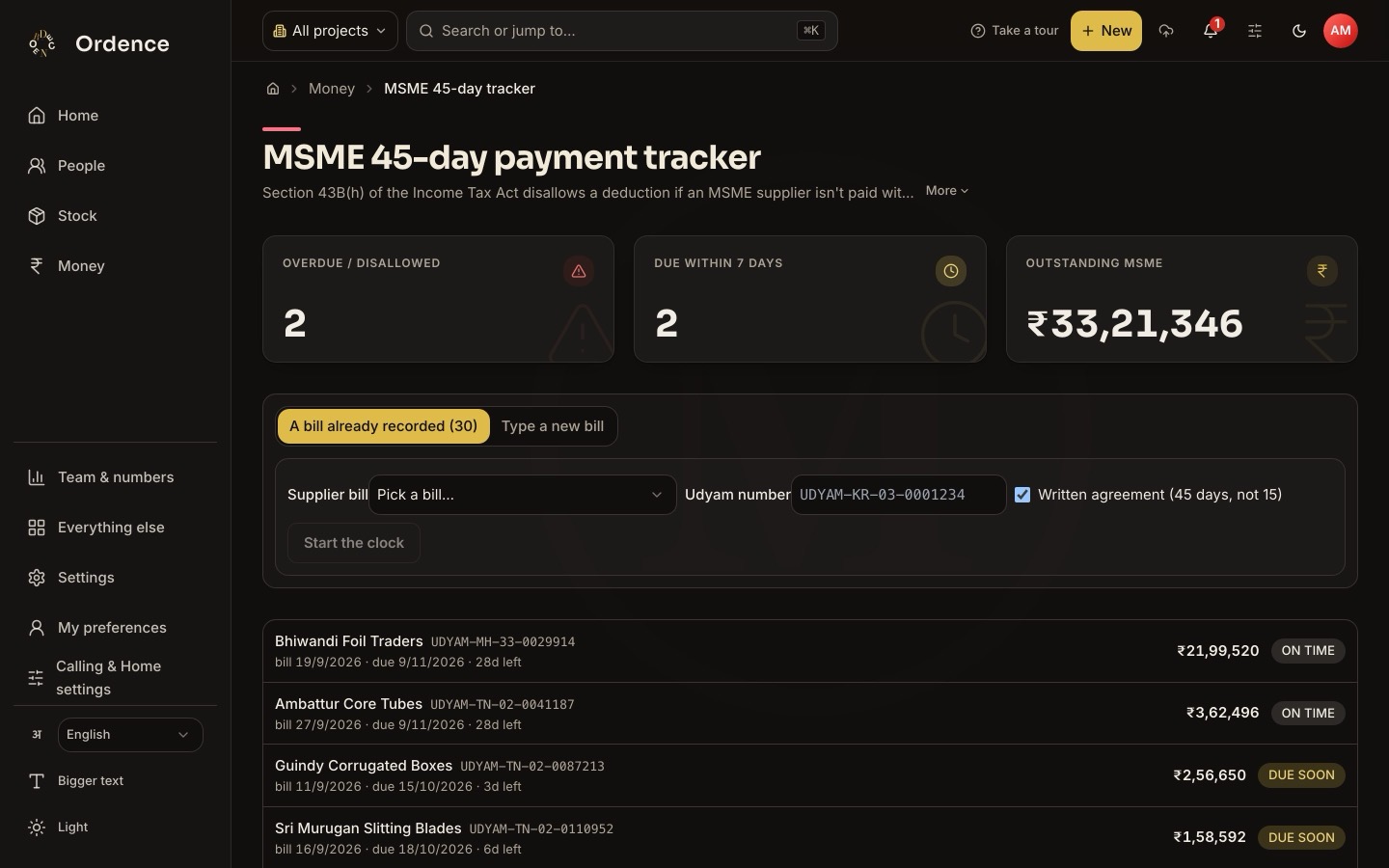
- MSME payment clock. A countdown on what you owe micro and small suppliers. Pay late and you can claim the expense only in the year you pay, under section 43B(h), now section 37(2)(g) of the Income-tax Act 2025. It covers manufacturers and service providers, not traders. The MSME 45-day rule guide explains who counts.
- TDS tracking. Section and rate on each deduction, with the higher rate for a party without PAN under 206AA, now section 397(2) of the Income-tax Act 2025.

Working with Tally
An optional connector on the Tally PC moves entries both ways. It never creates ledgers or deletes anything, so your CA keeps working in Tally.
Imports can cover several companies. A read-only connector (MCP) lets you ask Claude about your Tally books.
For your accounts team
What changes, and what stays.
- Each entry is made once. No retyping from a spreadsheet into Tally.
- Nothing books until a person confirms. Bank matches and AI drafts both wait.
- The stock upload must balance before it is accepted. So day one starts right.
- Tally stays with your CA. In the books they already know.
What it does not do
- No ledgers made in Tally. Nothing in Tally is deleted either.
- No filing through a government API. A person uploads the files. The IRN is made on the portal.
- No TDS returns. TDS is tracked, not filed.
- No automatic bank connection. Statements come in as files.
- No online payment collection. Invoices carry a UPI QR; no payment gateway.
Questions
Do we have to stop using Tally?
No. Ordence imports TallyPrime or Tally.ERP 9 data, matches against it and exports Tally-ready XML. The optional connector moves entries both ways without creating ledgers or deleting anything. Ordence also keeps its own full books.
Does Ordence file GST returns?
No. It prepares the GSTR-1 file, GSTR-3B figures and e-way bill details. You or your CA upload them and make the IRN on the portal; nothing is filed through an API.
How does the MSME clock work?
Bills from suppliers marked micro or small count down to the limit: 15 days from acceptance with no written agreement, or the agreed date, never over 45 days, with one. Approve payments before a late one costs the deduction. Traders on Udyam are outside the rule, so mark only manufacturers and service providers. The law counts from when you accepted the goods, so check that date if it differs from the bill date.
Last reviewed 16 October 2026.
Bring a month of invoices and one bank statement.
We will show how they match in Ordence, from sales register to GSTR-1 file and bank. Or try the model first, on synthetic figures.
Questions first? Email the founders.