
Stock and slitting
Every reel, its lot and its cost, down to the last cut.
A barcoded stock list that must balance. Cut plans that price the waste before cutting. And a landed cost per square metre that passes from each big reel (the jumbo) to every reel cut from it.
What it does
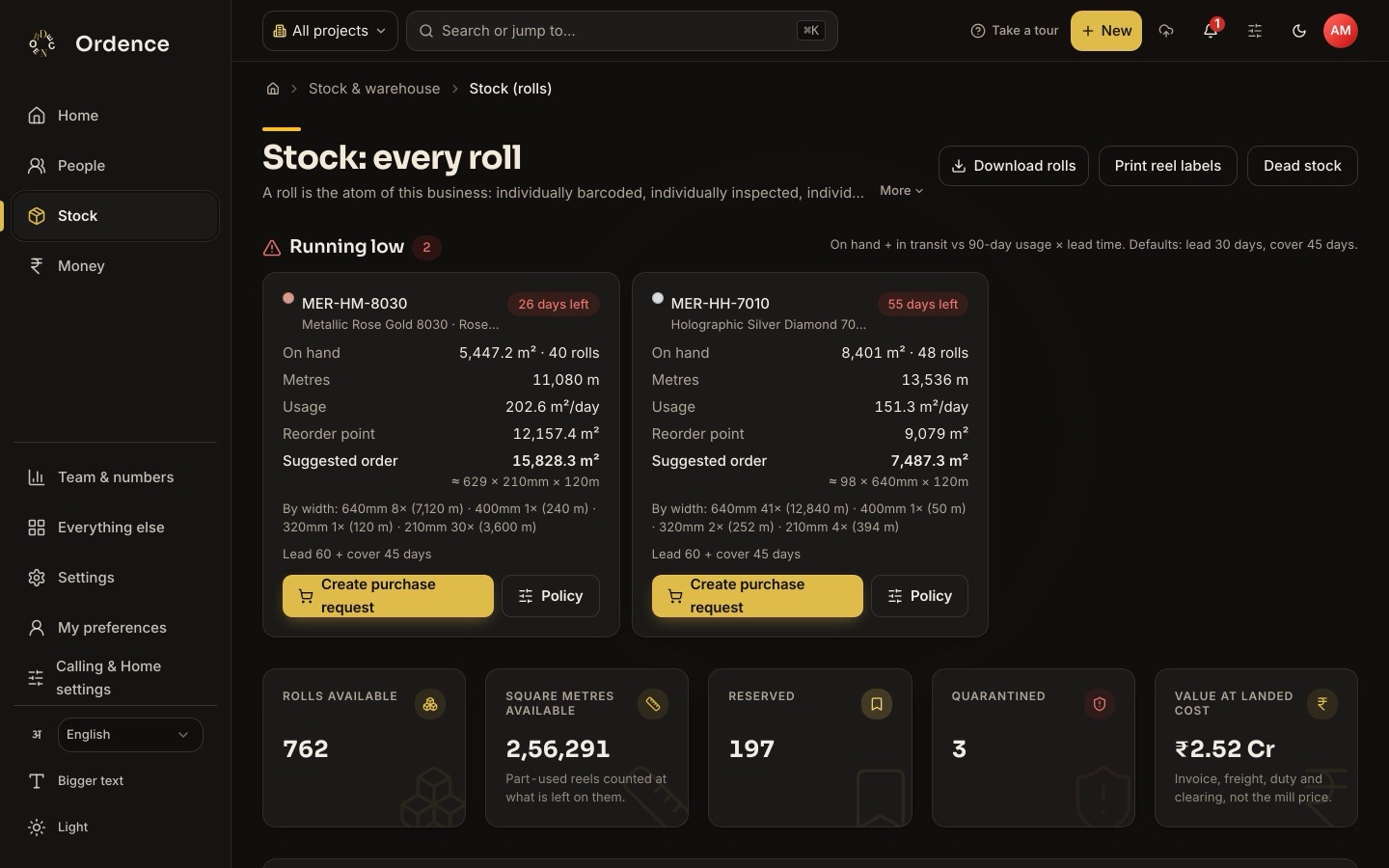
One record per reel.
Barcoded register
Each reel or batch has a status, rack, shade and width. Code128 and QR labels scan with any phone.
Stock-take grid
Count rack by rack on a phone. Every difference shows on one screen.
Dead stock, shelf life and reorder alerts
Reels that have not moved, batches near expiry, and grades running low.


A register that has to balance
How stock comes in, and stays right.
Your Excel stock list is accepted only once it adds up. After that, every receipt, cut, transfer and dispatch is added to a history no one can edit.
A reel on quality hold cannot be picked. See traceability.
Slitting, with the waste in rupees
Synthetic sample: a 640 mm by 120 m jumbo at ₹18.50 per m², 1 mm lost per cut (kerf), 5 mm edge trim each side.
| Line | Pattern A: 5 x 100 mm + 1 x 120 mm | Pattern B: 6 x 100 mm |
|---|---|---|
| Usable strips | 620 mm | 600 mm |
| Total waste width | 20 mm | 40 mm |
| Waste at ₹18.50 per m² | ₹44.40 | ₹88.80 |
| Yield (usable / 640 mm) | 96.9% | 93.75% |

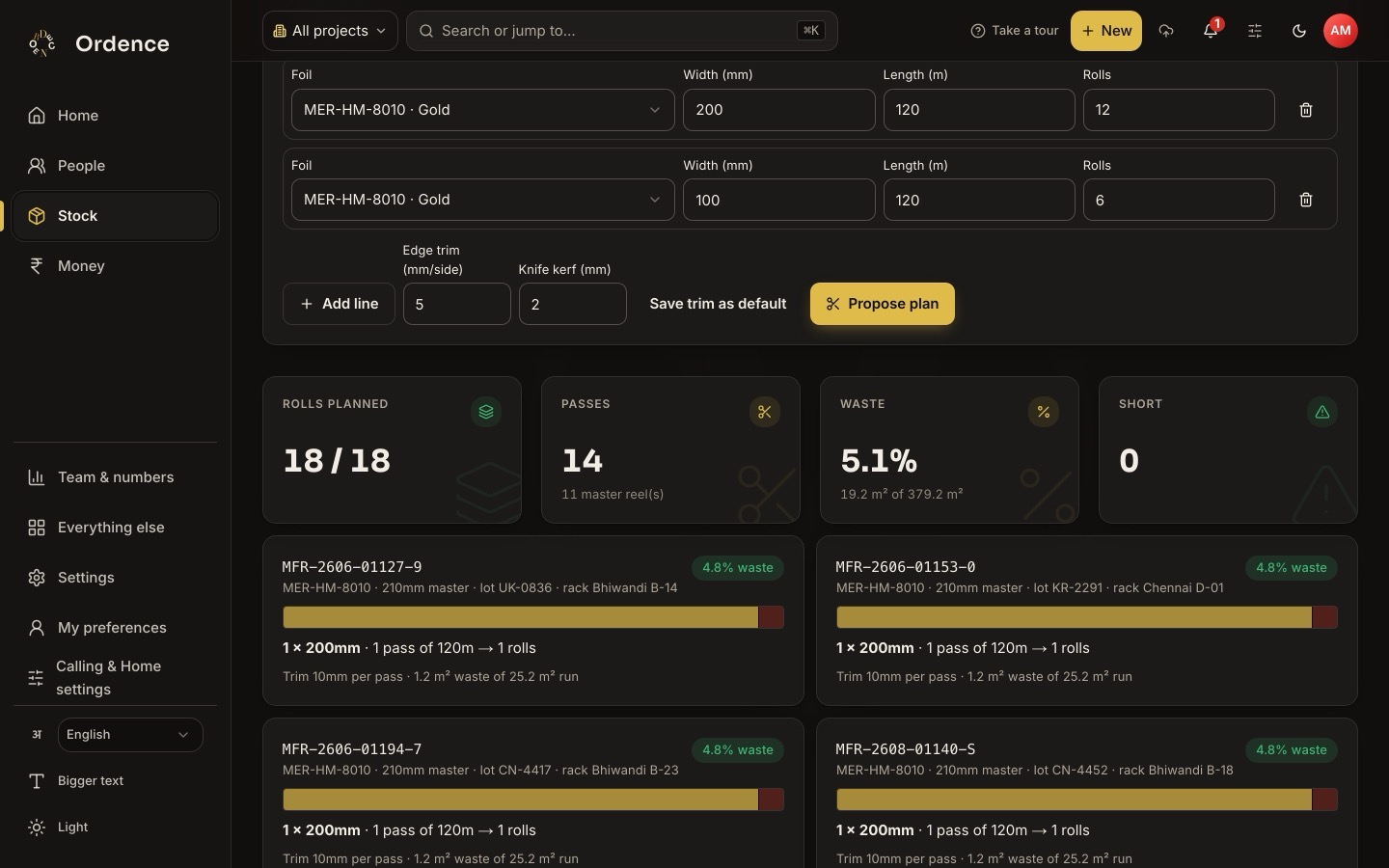
The planner picks pattern A: half the waste. After the job, the real waste is recorded. Each cut reel keeps its parent's mill lot and landed cost.
Imports, landed cost and buying
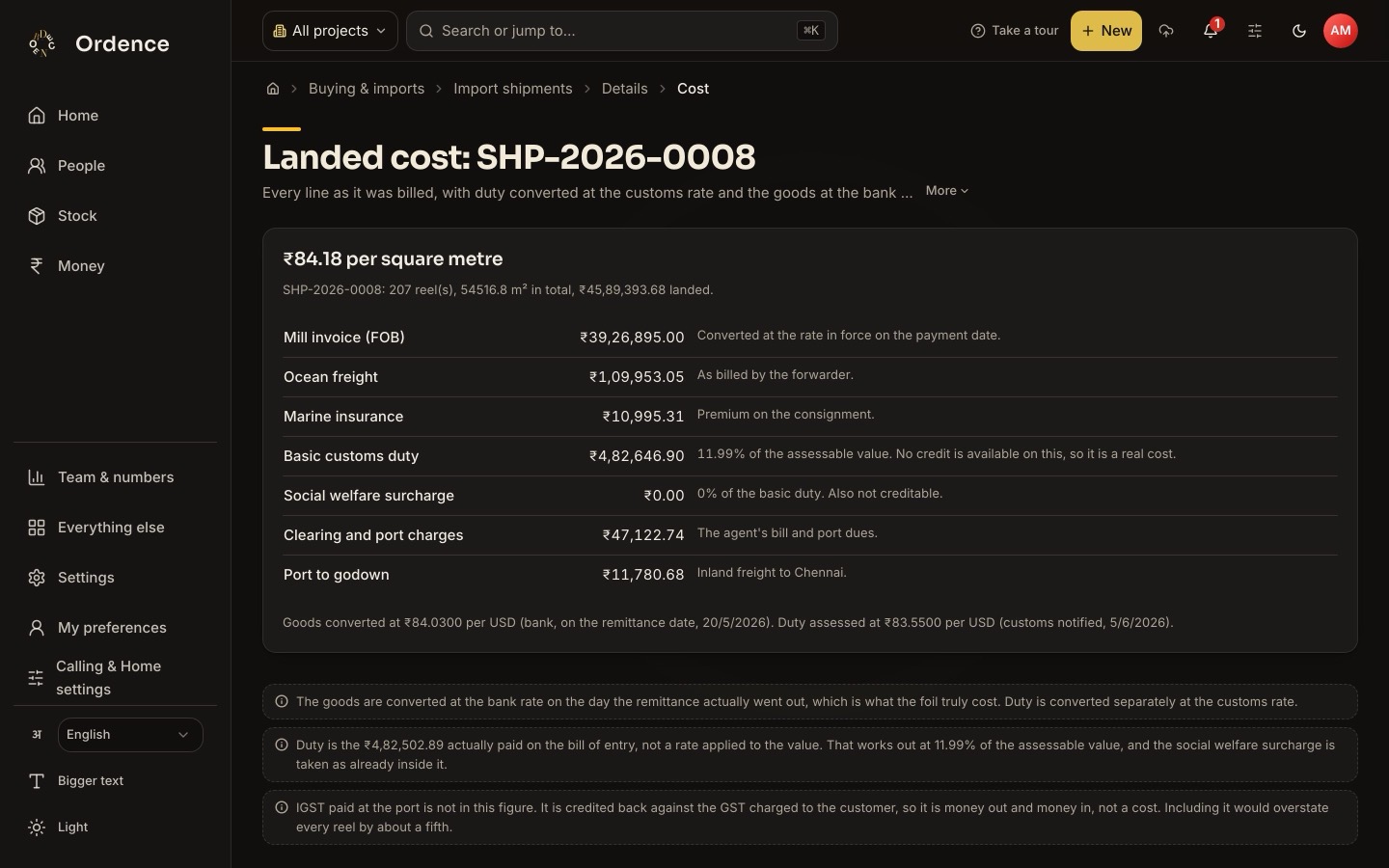
What a reel really cost, and when to buy more.
- Landed cost per m². Freight, duty and clearing are spread over each reel in a shipment, by value or by area. IGST paid on import stays out of cost, as tax credit.
- FX exposure. Unpaid foreign-currency bills, at rates your team enters.
- Buy suggestions and margin alarms. Purchase suggestions based on use, and a flag on grades below target margin.

What it does not do
- Slitting is not manufacturing. It cuts reels you bought. Making product from a recipe (work orders, routings, quality holds, job work) is the manufacturing pack.
- No multi-currency books or live exchange rates. The books are in rupees.
- No retail counter. It sells to the trade, by the reel, roll, batch or lot.
Questions
Can we bring our current stock list across?
Yes. Upload the Excel list. Ordence checks it balances, then prints barcode and QR labels.
How is waste costed in slitting?
Waste width (cut loss, edge trim, offcuts) times reel length gives an area. That area is priced at the reel's landed cost per m², in rupees for each pattern.
See your godown, reel by reel.
Send a page of your stock list and the three widths you cut most. On the fit call we show how they sit in Ordence, and what each cut wastes in rupees.
Questions first? Email the founders.