
Roll and batch trading
Live at one hot and cold stamping foil trader
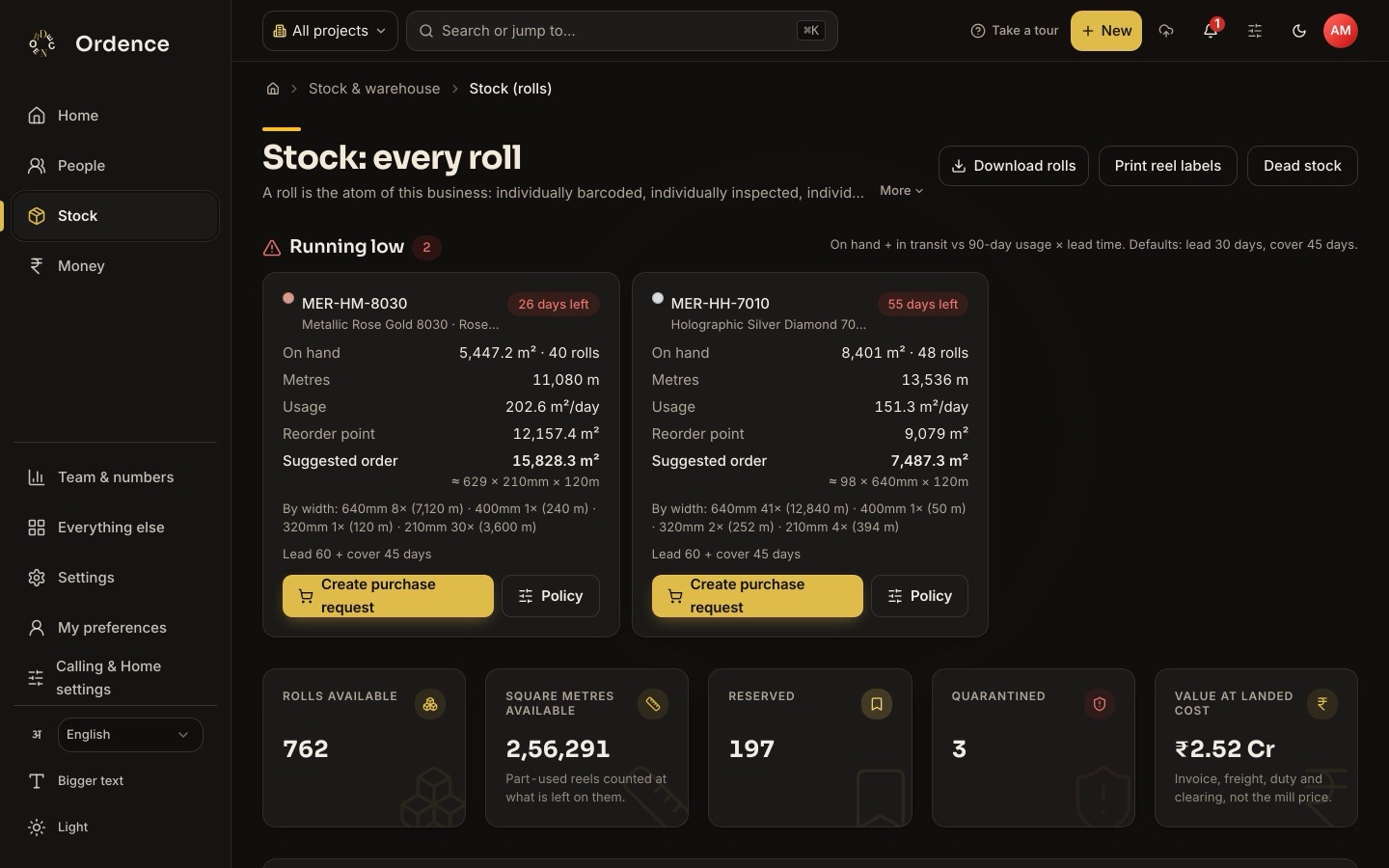
Quote from the reel in your godown, at its landed cost.
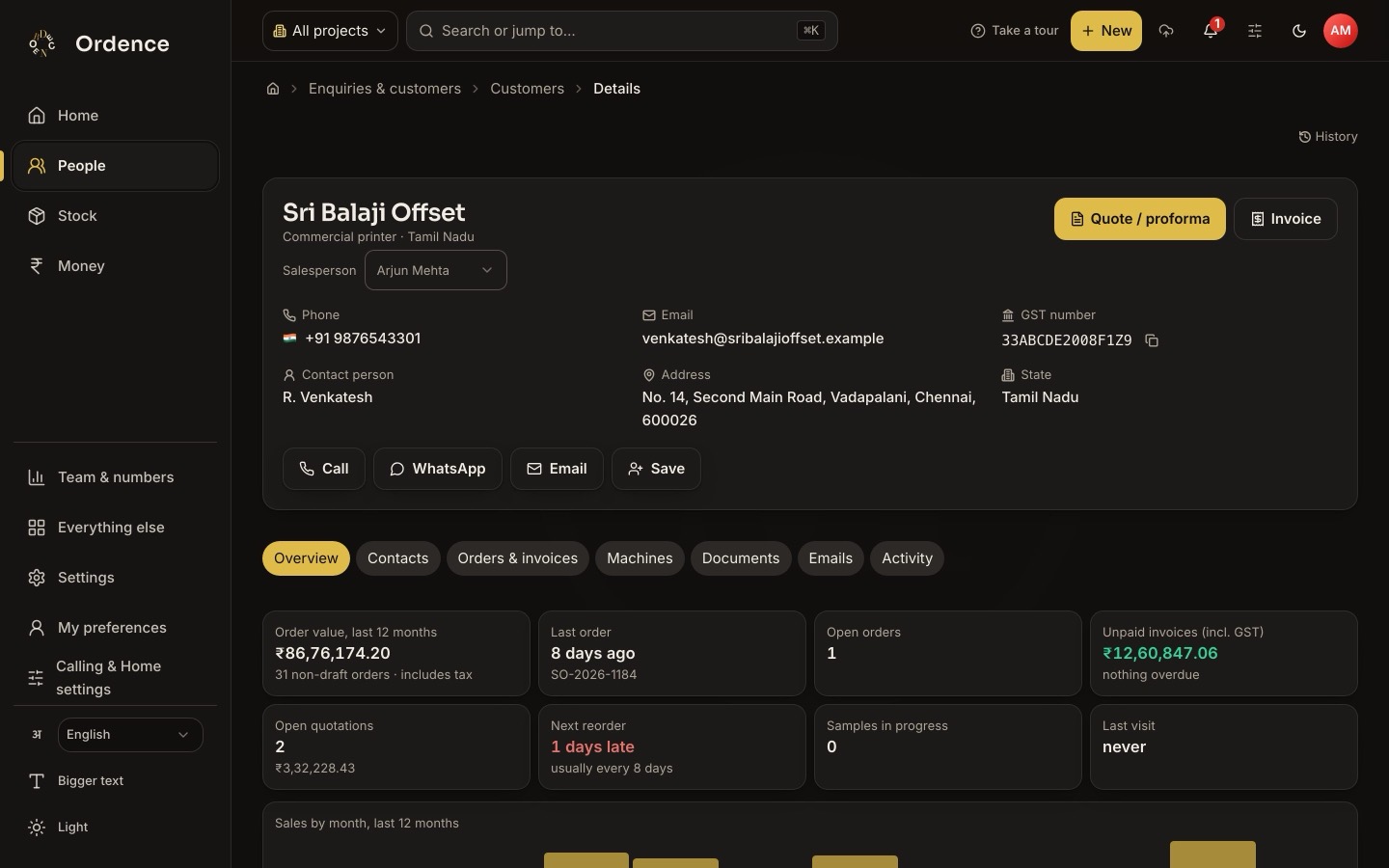
Each reel carries its lot, shade, width and landed cost (price plus freight and duty), from the IndiaMART enquiry to the reorder six weeks later.
Stock that is not all alike
Two reels with one item code can still be wrong for the same buyer.
You sell a 640 mm reel of one shade, from one mill lot, at a landed cost per m². Ordence keeps all four on the reel, so the answer on the phone does not depend on who is at the rack.

What the trade's week looks like
One order, enquiry to reorder.
Enquiry and sample
An IndiaMART enquiry goes to the next salesperson in turn. A sample stage comes before price talks.
The quotation
Per inch or per m², GST worked out from the buyer's GSTIN, and the margin shown. A quote below margin waits for the owner.
Slit to width
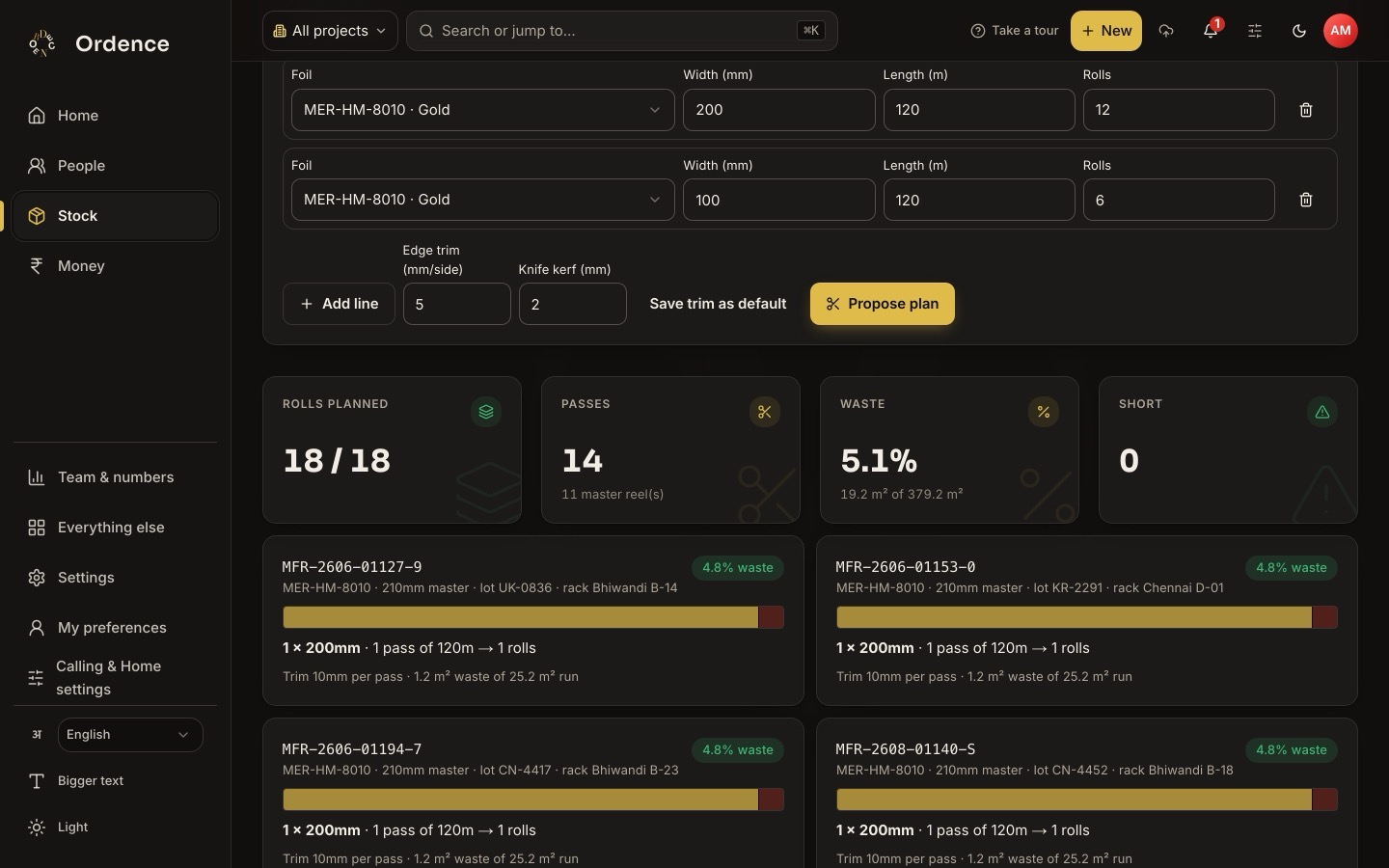
Each cut plan shows its waste in rupees. The smaller reels keep the big (jumbo) reel's lot and landed cost.
The shade gate at dispatch
The packer scans each reel. The gate blocks a mixed lot, or a lot this buyer has not approved.
Invoice and books
The GST invoice feeds the GSTR-1 file and the books. You or your CA upload and file.
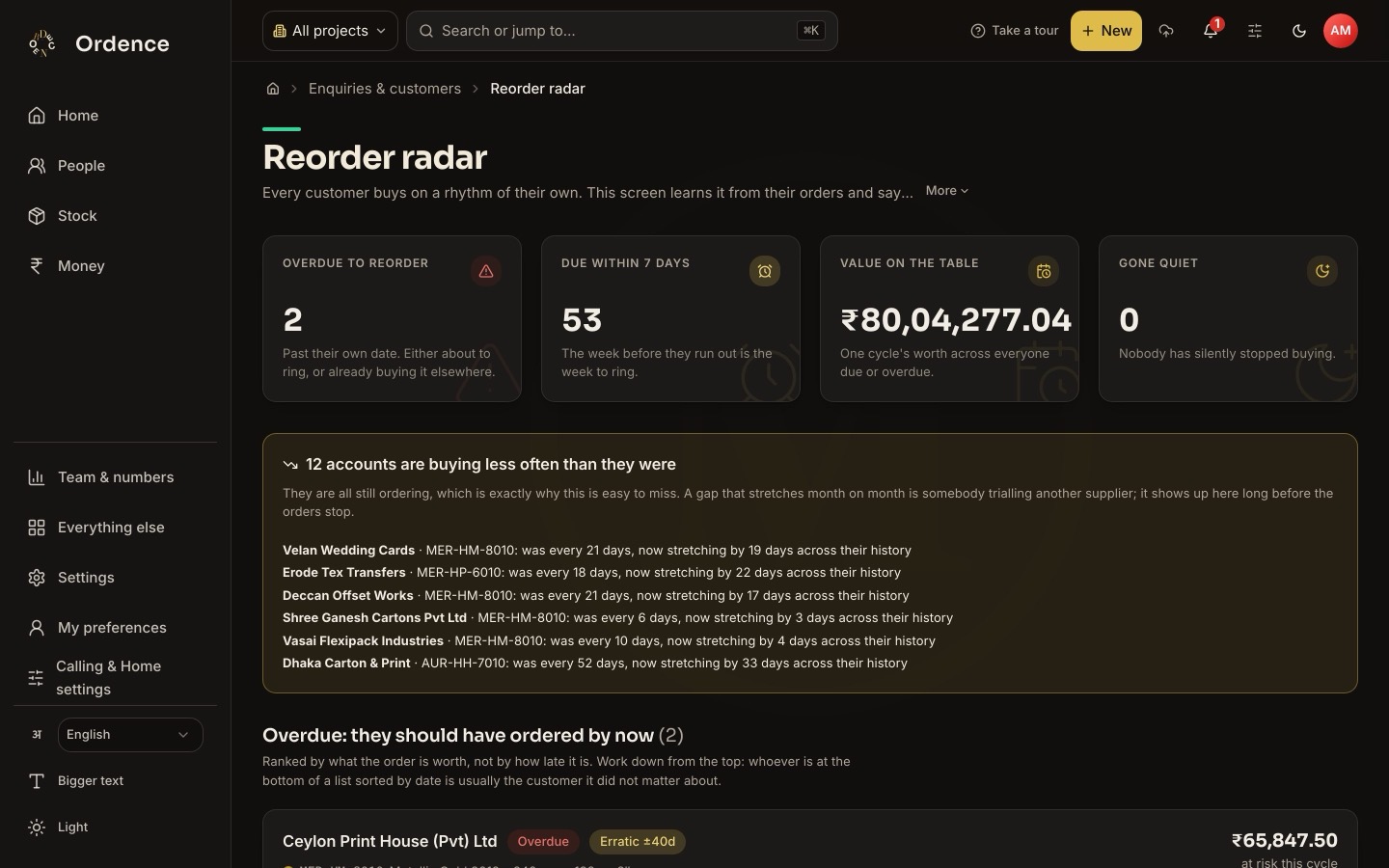
The reorder radar
When a buyer is past their usual gap between orders, they show up on a list, biggest money first.


Where each trade loses money
One pack, six trade guides, a different leak in each.
Stamping foil and textiles
Shade shifts from lot to lot. Buyer approvals and the shade gate keep the wrong lot in the godown.
Paper, board and cable
Lots look the same on the rack. The trace from invoice to reel to mill lot names every other buyer of that lot.
Film
Freight, duty and the exchange rate change the real cost. Each reel carries its landed cost per m², with a margin alarm.
Labels
Many widths, small repeat orders. Per-inch counter rates, and a list of converters who have gone quiet.
Slit rolls and cut lengths
Foil, film, paper and labels are slit, with trim priced first. Cable is cut from the drum; watch the metres left.

What the pack covers
For traders who buy jumbo rolls or mill lots and sell slit rolls, metres or kg.
- Every reel, roll or lot on record. Barcoded, with status, shade, width and rack. Found from a phone.
- Complaints traced to the mill lot. Invoice to reel to mill lot, then everyone else who got that lot.
- Slitting with the waste in rupees. Cut plans allow for blade loss and edge trim. Each smaller reel keeps its lot and cost.
- Landed cost on each reel. Freight, duty and clearing spread onto the reel, so the quoted margin is the billed margin.
- Buying and imports. Purchase orders to mills, the bill of entry and its duty, goods received as barcoded reels.
- Credit before the order. A party on hold or over its limit is flagged before you take the order. Overdue bills are chased.
What it means: a salesperson can tell a buyer on the phone whether a 640 mm reel in the approved shade is in stock, and on which rack.
Distributors who sell to dealers have their own pack, sharing this one's stock, sales and GST: Distribution.
GST for roll and batch trading
The trader's duties, and how Ordence helps.
What GST asks of you
An e-way bill when a consignment is worth over ₹50,000 between states, or over the state's own limit within it. Goods sent to a job worker in another state need one at any value.
An e-invoice (IRN) on business sales once turnover in any year since 2017-18 crossed ₹5 crore. At ₹10 crore and above, it must reach the portal within 30 days of the invoice date.
HSN on invoices: 4 digits up to ₹5 crore turnover, 6 above.
One pack, two rates. Foil, film, paper, board, plastic labels and cable are 18%; yarn, fabric, woven labels, PP woven sacks and paper cartons are 5%. The rate follows the HSN of what is sold, so a slit reel keeps the jumbo's rate.
GSTR-3B tax now comes from GSTR-1 and is locked. Fix errors in GSTR-1A or a later GSTR-1.
Import IGST on the Bill of Entry shows in IMS (the portal's invoice inbox) and feeds GSTR-2B.
Input credit only on bills that appear in GSTR-2B, and paid within 180 days. Goods lost, written off or given as free samples carry no credit.
A discount agreed before the sale and linked to its invoices can reduce GST on a credit note, once the buyer reverses that credit. Other later discounts go on financial credit notes, with no GST change.
A converter buying 18% board or film and selling 5% cartons or sacks builds up credit. The refund covers input goods only, not services.
What Ordence does
Invoices with HSN, and CGST, SGST or IGST worked out from the buyer's GSTIN.
GSTR-1 and GSTR-3B figures from your own invoices.
Input tax credit is checked line by line on every purchase bill, by HSN and date. Blocked credits under section 17(5) are flagged and kept out of your claim.
GSTR-2B matched to purchases. Credit not yet in 2B is held back and listed for the supplier.
E-way bill files ready to upload. On a distribution system, a consignment over ₹50,000 cannot leave the gate without its e-way bill number.
Import IGST held as credit, outside landed cost.
You or your CA file on the portal.
GST rules last checked 16 October 2026, against Notification 9/2025-Central Tax (Rate), CBIC notifications and GSTN advisories. Rates and limits change. Confirm how they apply to you with your CA.
Live in production
At the foil trader it runs enquiries, quotes, slitting, the shade gate, invoices and books. No film, paper, label, textile or cable trader runs it yet. One company per system.
What it does not do
- It files nothing. GST return figures and e-way bill files are prepared for upload; the e-invoice IRN is made on the portal and typed back against the invoice.
- It never makes ledgers in Tally or deletes anything there. The optional connector, or a file, carries the entries.
- Factory production is not here. Work orders, bills of material and batch history are in the manufacturing pack.
Questions
Can we find a reel by shade and width from the godown floor?
Yes. Every reel or batch has a barcode and QR label. On a phone, search by shade, width or rack, or scan the label.
How is landed cost worked out on imported reels?
Shipment costs are spread over the reels by value or by area, giving a cost per m². Import IGST is held as credit and kept out. Slit reels keep that cost and the lot.
What stops the wrong shade going to a customer?
The shade gate at dispatch. It blocks a mixed lot, or a lot the customer has not approved, before the reel is scanned out.
Does it work for a trade that is not listed here?
Ask if your stock comes in reels, rolls, coils or lots, and lot, shade, width or shelf life matters to buyers. Say how you sell when you apply; the reply says if it fits.
Bring one order, from enquiry to invoice.
The WhatsApp it began on, the quote, the slitting slip and the bill. On the fit call we run it through the six steps above.
Questions first? Email the founders.