
Textiles and fabric
Two dye lots on one cutting table make two colours of shirt.
So a repeat order must come from the dye lot the garment unit approved. The roll and batch pack runs at one stamping foil trader; no fabric trader has run it yet.
Where the margin leaks
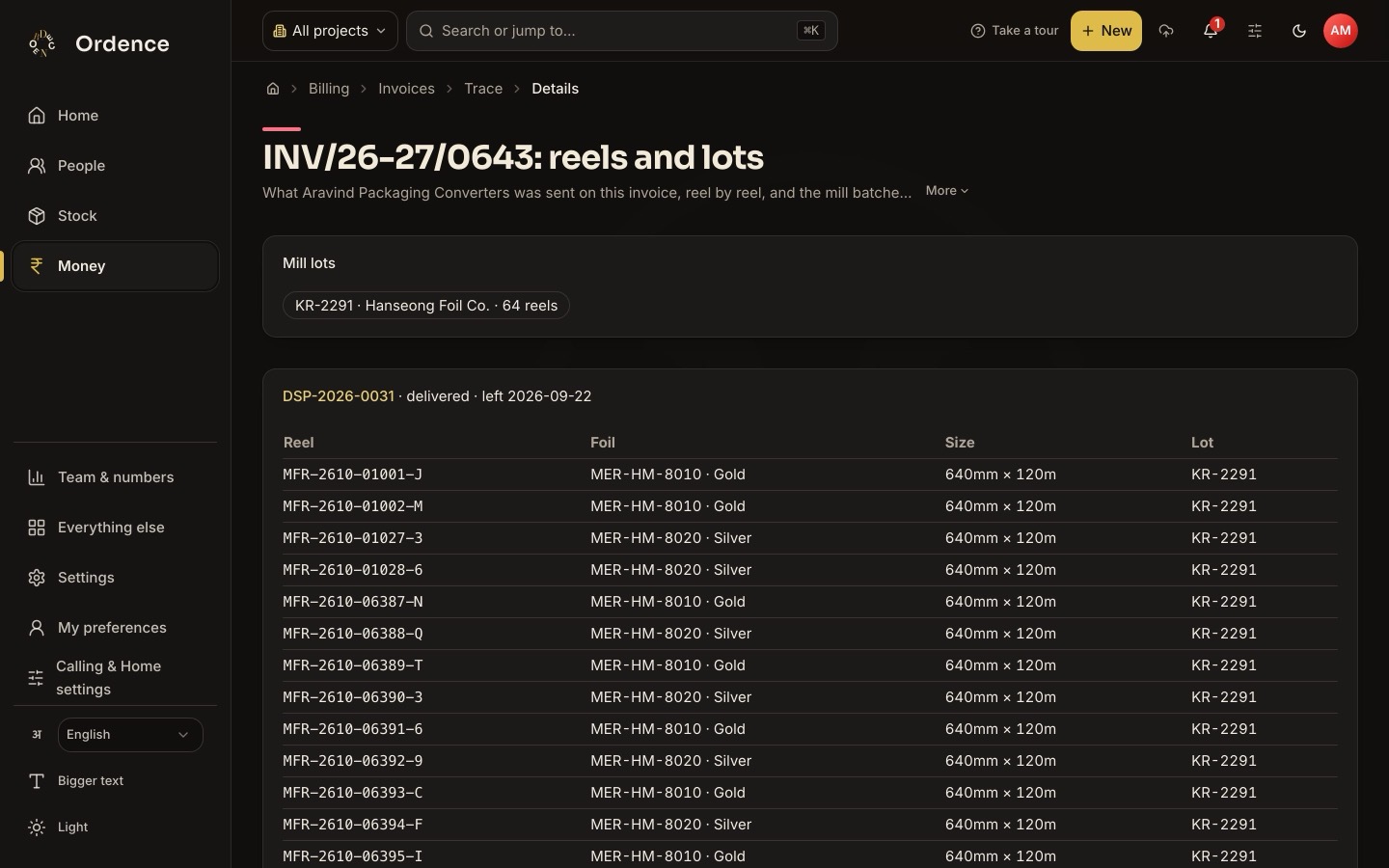
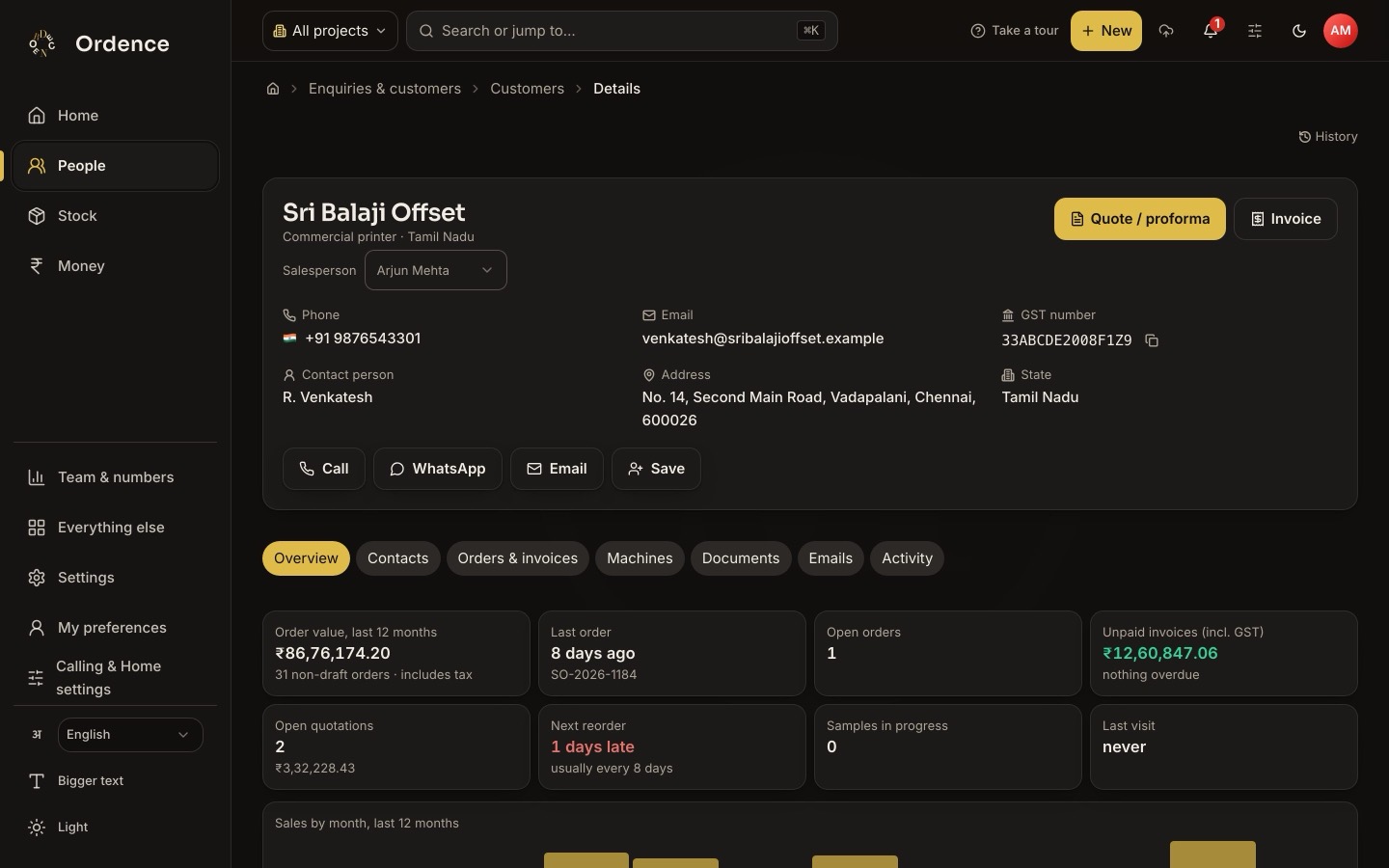
Each dye lot is a slightly different shade. A garment unit expects the repeat to match the lot it approved, and returns rolls that do not. Ordence records each buyer's approvals by lot and blocks a mixed or unapproved lot when rolls are scanned out. Every invoice traces back to its rolls and lots.
How the fabric trade works
Bought in thans and rolls, sold by the metre, matched by dye lot.
A than is a piece of cloth; its length varies by mill. Fabric sells by the metre, with width in inches and weight (GSM or grams per running metre) as a check. Much of it starts as grey (undyed) fabric sent to a process house on job work for dyeing or printing. It comes back in dye lots, each with a shade number, and shorter after shrinkage and cuts. That gap is accepted or claimed.
Short cut ends are fents: in law, a piece over 45 cm and under 90 cm of fabric at least 1 m wide. A unit cutting two thousand shirts needs every roll from one dye lot. A repeat means the same lot, or a new one the buyer approved against their swatch.
Units and documents
- On the roll. Quality, width, metres, dye lot, shade number, and the roll number on the packing list.
- For job work. A delivery challan out and back. Sending to a job worker in another state needs an e-way bill whatever the value.
- Once or twice a year. ITC-04 for goods on job work: half-yearly if last year's turnover was above ₹5 crore, otherwise yearly.
GST and HSN for textiles
What GST asks of you
Woven fabrics of cotton (5208 to 5212), of man-made filament (5407, 5408) and of man-made staple fibre (5512 to 5516), and knitted fabrics (Chapter 60), are 5%, in Schedule I. Cotton yarn (5205 to 5207) and man-made filament yarn (5402 to 5406) are 5% too.
Job work on textiles stays at 5%; most other job work went from 12% to 18% on 22 September 2025.
What Ordence does
Shade approvals kept by lot; a dispatch gate blocks a mixed or unapproved lot.
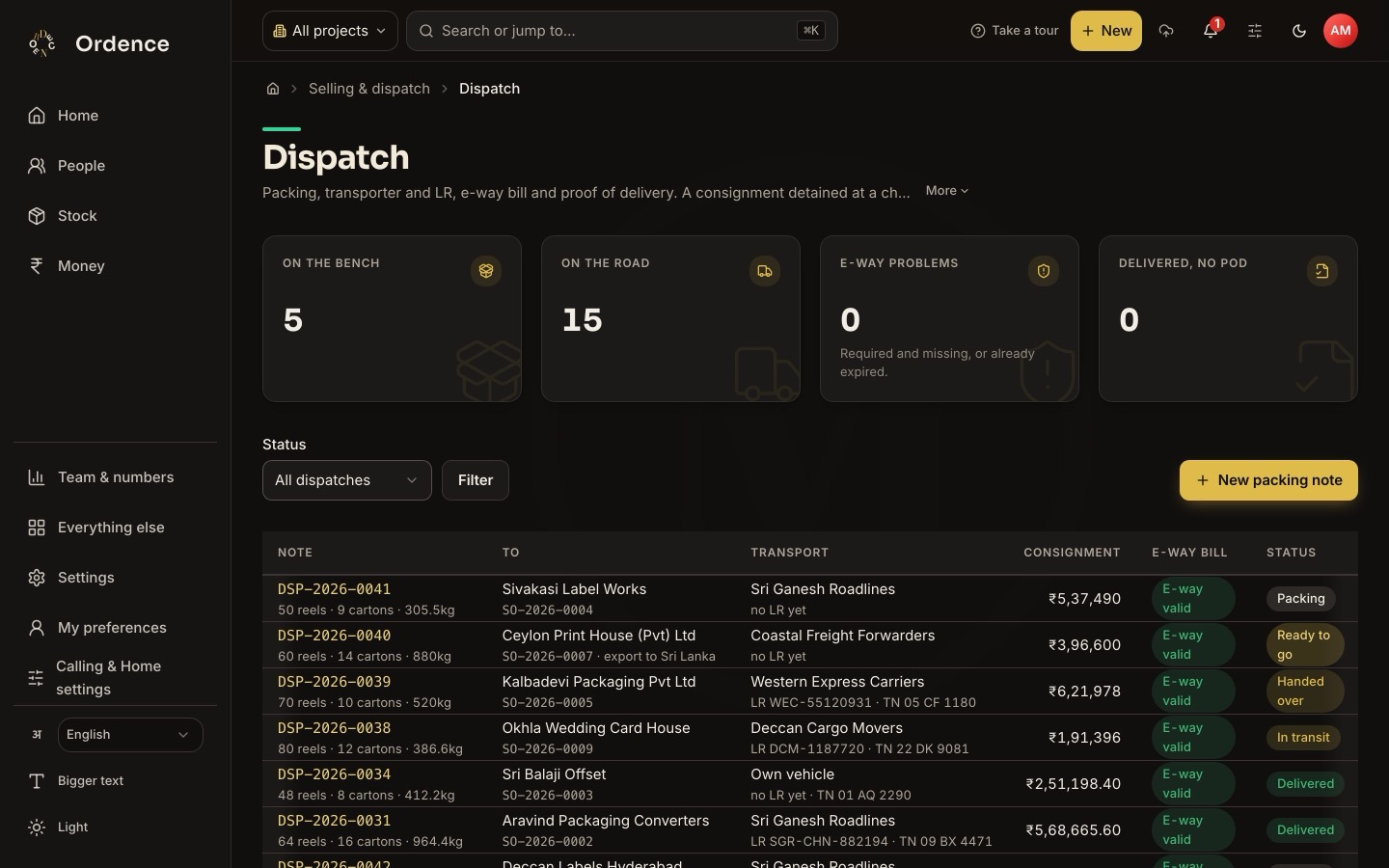
Packing notes with transporter, LR (lorry receipt) and e-way bill fields.
Job-work challans and ITC-04 are in the manufacturing pack. If grey fabric goes to a process house, raise it on the fit call.
GST rates checked 14 October 2026 against Notification 9/2025-Central Tax (Rate), in force since 22 September 2025. Classification depends on the exact goods. Confirm yours with your CA.
In the system
The foil trader's screens: an invoice traced to its lots, the dispatch board, a buyer's account. Check metre-wise selling from a roll on the fit call.



Questions
Can dispatch stop a roll from a different dye lot?
Yes. The scan at dispatch blocks a mixed lot, or one the buyer has not approved.
A garment unit finds two shades in one order. Which other buyers got that dye lot?
Open the invoice to see each roll and its dye lot, and the list of every other buyer who got that lot.
Does the packing note carry transporter details?
Yes: transporter, LR and e-way bill. Delivery is proved on a phone with a photo and the receiver's signature, even offline.
Bring your dye-lot register.
And the swatches your garment units approved. On the fit call we check how your lots, metres and process-house stock fit in Ordence.
Questions first? Email the founders.